Nearly 70 years ago, four small communities faced a challenge that sounds a lot like the conversation we're having today: how do we provide our kids with the opportunities they deserve when enrollment is low and maintaining separate schools is becoming difficult?
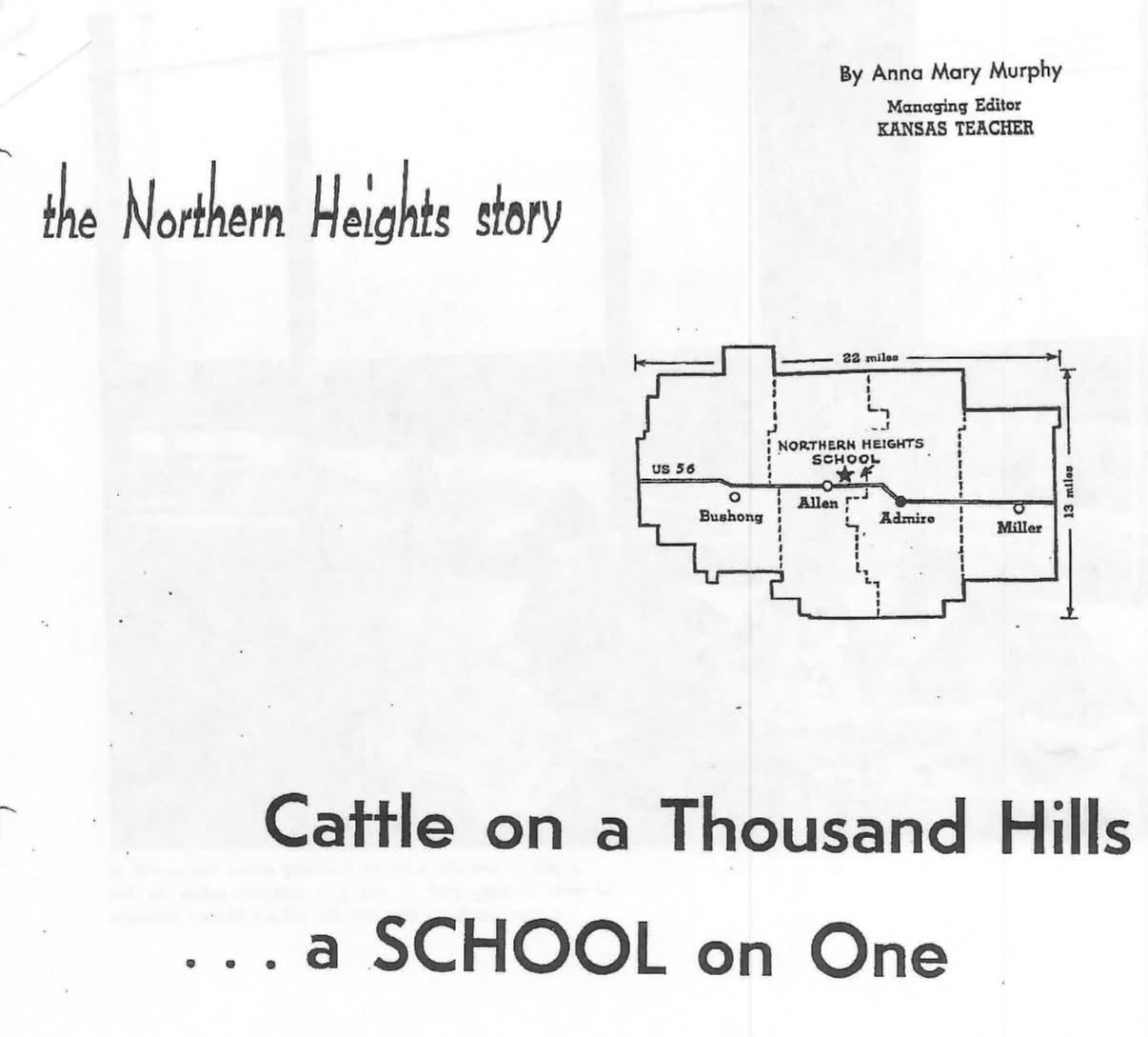
In the mid-1950s, Miller had just 17 high school students, Allen had 30, and Admire had 35. Miller was at risk of losing its accreditation after enrollment fell below 20 students for the second consecutive year. Bushong was also struggling, and the article described a town that had dwindled to just 16 residents after its bank failed in the early 1930s.
Operating separately, these schools struggled to offer a variety of classes, maintain accreditation, and afford the cost of educating so few students in separate buildings.
Rather than accept fewer opportunities for their kids, these communities chose to work together. When Northern Heights opened in 1957 with approximately 100 students, it offered opportunities the smaller schools couldn't provide on their own, including science labs, business courses, shop, music, and athletics.
This wasn't just about building a school. It was about giving rural kids more opportunities while keeping them in their own communities.
Today, we're hearing that Northern Heights doesn't have enough students to justify investing in new school facilities. But low enrollment was part of the very reason these communities came together in the first place. They recognized that their kids deserved opportunities, too, and they found a way to provide them.
Nearly 70 years later, we're facing another decision about the future of our schools. The question is whether we're willing to make an investment that supports the next generation, just as the generations before us did.
They made a choice for their kids and their communities. Now it's our turn.